
AI-Powered B2B Customer Intelligence, Built on Your ERP Data
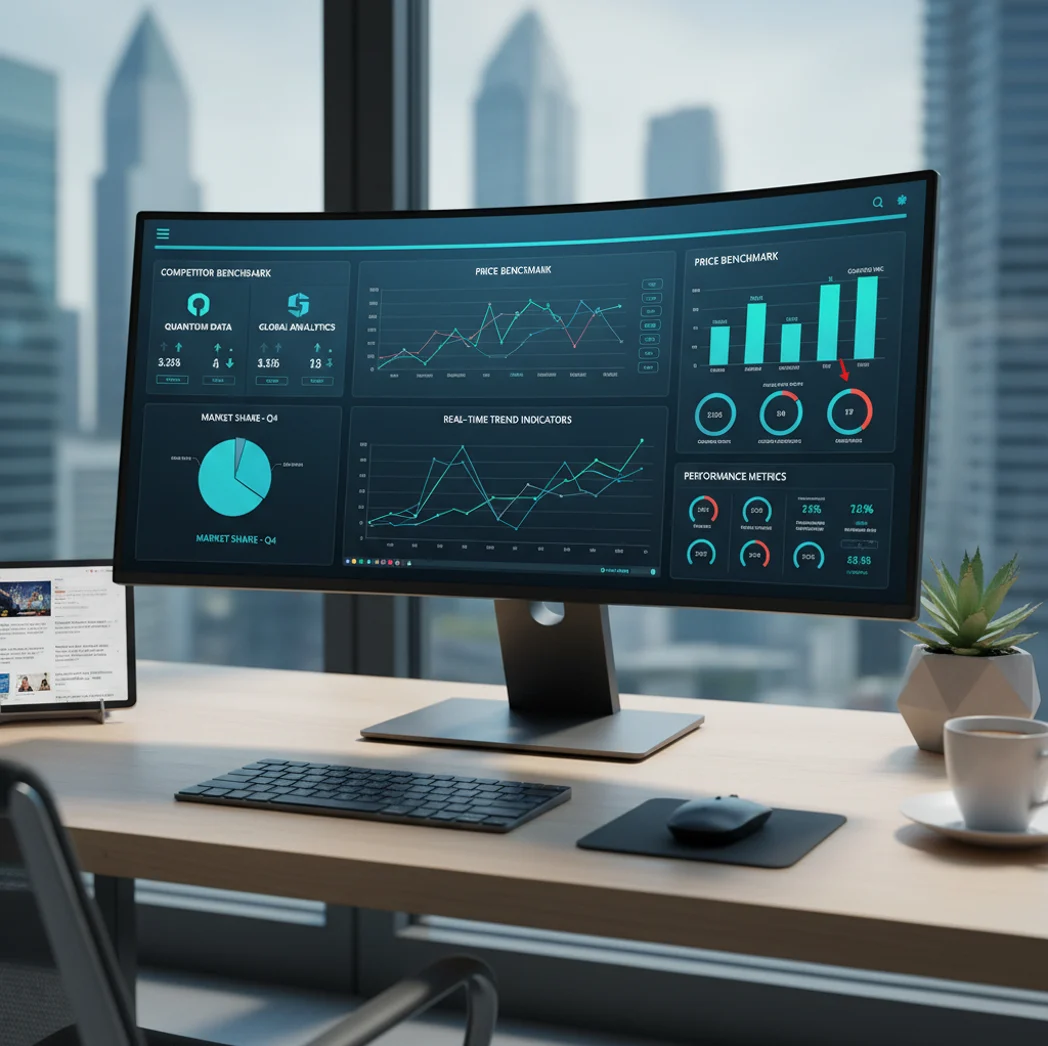
B2B personalization means the right product to the right account, powered by the purchase history and contract terms already in your ERP. DotcomWeavers builds the intelligence layer that connects them.
Built for manufacturers, distributors, and wholesalers on Adobe Commerce, BigCommerce, Shopify Plus and Magento Open Source— with ERP data at the center.
Intelligence Node

The Revenue Your Accounts Are Leaving Behind — Because Your Storefront Doesn't Know Them

B2B personalization is not “customers who bought this also bought that.” Your buyers expect supplier platforms to know their industry, history, pricing, and approved products automatically. Most B2B storefronts deliver none of this.

Generic Catalog, Missed Revenue

Every account lands on the same homepage. A buyer with 40 regular SKUs sees the same catalog as a first-time visitor.

Invisible Cross-Sell Opportunity

Your best accounts trust you, but without purchase intelligence, your sales team is the only path to expansion. That doesn’t scale.

Sales Reps Owning What Data Should Drive

Account managers track patterns manually and rely on gut instinct. That knowledge leaves with the rep and never scales past a few accounts.

ERP Data Locked in the Back Office

Order history, pricing, and buying patterns sit in your ERP, invisible to the storefront. The intelligence exists; it’s just disconnected.

No Signal Before an Account Goes Quiet

Distributors usually discover churn after it happens, when a regular buyer stops ordering. No monitoring means no early warning.
The data to fix this already lives in your ERP. Customer Intelligence connects it to the buying experience, so every interaction runs on what you know, not what you guess.

Different Buyers, Different Data, Different Playbook

Consumer personalization works on individual behavior. B2B personalization works on account behavior — and the data model, the logic, and the activation layer are completely different.

B2C Personalization

What Most B2B Storefronts Actually Do

True B2B Account Intelligence

Individual-level
Generic catalog for all accounts
Account-level segmentation by industry, size, purchase frequency, contract tier
Cookie-based behavior
Contract pricing is displayed but not personalized beyond the price
ERP-connected personalization that knows negotiated terms, approved SKUs, and order history
Real-time browsing signals
No behavioral layer on top of order history
Next-best-offer logic built on purchase pattern gaps, not browsing cookies
Single buyer, single decision
Sales reps supplementing what the platform can’t do
Churn prediction before accounts go quiet
Product affinity from browse history
Recommendation engines borrowed from B2C logic
Sales rep augmentation — not replacement
B2B Customer Intelligence starts with your ERP — not with a personalization engine dropped on top of a generic catalog.

What AI-Powered Customer Intelligence Looks Like Across Your B2B Accounts

Five capabilities that turn account data into a revenue engine, built into your platform and connected to your ERP.

1. Account Segmentation

The foundation everything else runs on.

AI segments your accounts by behavior, not just industry or size, using purchase frequency, order recency, SKU breadth, contract utilization, and churn risk. Segments update in real time, not on a quarterly cycle.
Tiered account treatment (enterprise vs. mid-market vs. long-tail)
RFM scoring across your account portfolio
High-potential account identification
Early at-risk flagging

2. Personalized Commerce Experiences

Every account sees a storefront built for them.
No generic catalog. Personalization runs across four layers:
Catalog: relevant categories surfaced first, irrelevant ones hidden
Homepage: recent orders and account promos replace generic banners
Search: results ranked by purchase history, not popularity
Pricing: contract rates shown in context, not discovered at checkout
Applies to Adobe Commerce, BigCommerce B2B Edition, and Shopify Plus.

3. Next-Best-Offer Intelligence

The most direct revenue lever in B2B.

NBO surfaces what an account should be buying but isn’t, using:

Purchase gap analysis
Complementary product logic
Reorder timing intelligence
Contract utilization signals

It shows up in three places: the storefront, the triggered email, and the sales rep’s dashboard before a call.

4. Churn Prediction & Early Warning

Stop losing accounts you didn’t know were at risk.

Churn is a slow drift, not a cancellation. We monitor:

Order recency deviation
SKU breadth contraction
Order value decline
Engagement drop-off
Payment behavior changes

Signals become recommended actions, not raw data: “This account hasn’t ordered X in 90 days, though they normally reorder every 60.”

5. Sales Rep Intelligence Layer

Human relationships, augmented by data.
Built to inform reps, not replace them. Each rep gets:
An account health dashboard
A pre-call briefing
A territory-wide opportunity map
An alert feed for accounts needing outreach today
This layer connects to your CRM (Salesforce, HubSpot) and is accessible inside the commerce platform rep tools — not as a separate dashboard that nobody logs into

How DotcomWeavers Implements Customer Intelligence — From Your Account Data to Your Commerce Experience

Customer Intelligence isn’t a plugin. It’s a straight line from your ERP data to a sales conversation that closes.

1. ERP & Account Integration

We connect to your ERP and account systems so every data point- credit history, order volume, spend pattern- lives in one place instead of scattered across systems.

2. RFM & Behavioral Analysis

We analyze that data across recency, frequency, and monetary value, how often accounts order, how much they spend, and where their patterns are shifting.

3. Predictive Modeling

We run prediction analysis on top of that data to flag opportunity and risk: which accounts are ready to buy more, and which are showing early signs of drop-off.

4. Sales Rep Activation

Reps get these signals directly, so outreach and order-taking are driven by data, not memory or guesswork.

5. Account Growth & LTV Increase

The result: accounts buy more, more often, and stay longer, driving measurable lifetime value growth.

Connected to Your ERP. Activated on Your Commerce Platform.

Customer Intelligence is only as good as the data it runs on. We build it connected to the systems that hold your real account intelligence — not a standalone layer running on surface-level cookie data.

If you run...

You get

Any Epicor ERP — Eclipse, Prophet 21, Kinetic, Eagle, or BisTrack
Account history and buying patterns pulled directly, no re-entry

NetSuite or a custom ERP / WMS

The same intelligence layer, built with a custom connector
Salesforce CRM or HubSpot CRM
Account and contact-level signals synced into the same profile
Adobe Commerce, BigCommerce, Shopify Plus, or Magento Open Source
Real customer intelligence surfaced at the point of sale, not guessed from cookies
Already using a CDP or marketing automation tool? We integrate Customer Intelligence into your existing activation stack — not as a replacement, but as the B2B account intelligence layer feeding it.

What Customer Intelligence Delivers — Measured Where It Matters

We track outcomes that show up in revenue, account retention, and sales team efficiency — not vanity metrics.

Account Lifetime Value Expansion

Accounts in personalized journeys with NBO recommendations show higher SKU breadth and order frequency over time, up to 40% higher lifetime value vs. generic catalog experiences.

Increased Average Order Value

NBO-driven cross-sell and upsell surface at the right point in the buying journey, increasing items per order and share of wallet per visit.

Reduced Churn Rate

Early warning detection and triggered outreach recover at-risk accounts before they disengage, turning an invisible drift into an actionable signal.

Self-Service Reorder Rate Increase

Personalized reorder experiences cut friction for repeat purchasing, shifting more orders to the digital channel without rep intervention.

Sales Rep Efficiency

Reps covering 100–500 accounts can’t stay informed manually. The intelligence layer keeps every conversation data-informed, cutting prep time and improving outreach quality.

Contract Utilization Improvement

NBO logic monitors commitment utilization, helping accounts maximize negotiated volumes while improving revenue predictability.

Built for the Account Complexity of Industrial B2B

B2B Customer Intelligence isn’t a retail personalization tool adapted for distribution. It’s built around the account structures, buying cycles, and catalog complexity that industrial B2B actually operates with.

Why DotcomWeavers?
Because Your Competitors Don’t Want You Here.

Your Strategic Partner in Enterprise Commerce

We bring together deep technical & business expertise, industry knowledge, and a collaborative approach to each client

Since
2007
Digital experience experts
0 +
Markets globally
0 +
Projects Built to Last
0 +
Industries transformed
0 +

Platforms / Technology Partnerships

We provide end-to-end ecommerce consulting services, Magento/commerce platform implementation, growth marketing, and managed services to deliver ongoing results.

FAQs

Clarifying Common Queries About Our Process & Solutions
Most B2B platforms show “frequently bought together” and “recently viewed” recommendations — these are session-level signals borrowed from B2C retail logic. Customer Intelligence operates at the account level: it knows this specific buyer’s contract tier, purchase history across 3 years, what peer accounts in their segment are ordering, and when they’re likely to reorder. The intelligence depth is categorically different.
Yes — that’s the foundation of everything we build. Account-level personalization that doesn’t run on ERP data is guesswork. We build the integration between your Epicor (or other) ERP and your commerce platform specifically so that contract pricing, order history, account hierarchies, and product entitlements power the commerce experience directly.
In B2B, NBO is both. On the storefront, it surfaces product recommendations based on purchase gap analysis and complementary product logic — products an account should be buying but isn’t. In the sales rep layer, it surfaces the same intelligence as an action item for outreach. The two channels reinforce each other: the storefront plants the seed; the rep follows up when the signal warrants it.
No — the segmentation model is part of what we build. We start with your account data (order history, industry, company size, purchase behavior) and design the segmentation architecture as the first deliverable. You don’t need to come in with segments predefined.