
Commerce didn’t get more complicated by accident. It became complex because every part of the business started pulling in a different direction: customers demanding speed and flexibility, sales teams pushing more channels, and finance insisting on tighter control. The result? Systems stitched together with integrations that barely hold, data that arrives late, and teams spending more time reconciling than growing.
By 2026, the companies pulling ahead aren’t the ones obsessing over storefront polish or the latest checkout gimmick. They’re the ones that have solved a far less visible, but far more expensive problem: getting ordering, checkout, and accounts receivable to operate as one continuous flow. No lag between systems. No revenue stuck in limbo. No end-of-month fire drills to explain what actually shipped, what got paid, and what’s still outstanding.
This is where Acumatica’s Commerce Stack stands apart. Not as another ecommerce integration layered onto an ERP, but as a commerce-first architecture built around financial truth. Orders don’t “eventually” reach the ERP. Payments don’t get reconciled after the damage is done. AR doesn’t live in a separate universe from customer activity.
This blog breaks down how Acumatica approaches modern commerce in 2026—why its ordering model holds up under multi-channel pressure, how checkout and payments stay tightly controlled without creating friction, and why its AR capabilities are becoming a strategic advantage instead of a back-office burden. If your commerce operation still relies on humans to glue systems together after the fact, this is the shift you’ve been waiting for.
Commerce Is No Longer a Front-End Problem
For years, commerce strategy was almost entirely front-loaded. Businesses poured time and budget into storefront redesigns, theme upgrades, UX experiments, and conversion rate hacks, because that’s where revenue appeared to live. If sales slowed, the instinct was to tweak the website.
But while the front end kept getting attention, the machinery behind it quietly deteriorated. Orders started breaking during syncs between platforms. Inventory numbers looked accurate until fulfillment tried to ship.
Finance teams spent days chasing payments that technically “went through” but never reconciled cleanly. Accounts receivable aged not because customers wouldn’t pay, but because systems couldn’t agree on what was owed.
This is the failure that most commerce platforms don’t talk about. Commerce rarely collapses at checkout. It collapses after checkout, when orders leave the storefront and enter the operational core of the business.
That’s the inflection point Acumatica addresses head-on. Instead of treating commerce as something that feeds into an ERP after the fact, Acumatica treats commerce as an ERP-native operation from the start. Orders don’t pass through layers of middleware, hoping nothing breaks. Payments aren’t reconciled days later. Invoices and credits aren’t patched together manually.
Every order, payment, invoice, and credit event is created within a single financial framework—connected in real time, governed by the same rules, and visible across teams the moment it happens. This isn’t a cosmetic improvement to the commerce experience. It’s a structural shift in how revenue actually moves through the business.
Ordering in 2026: One Flow, Not Five Systems Arguing
Orders Don’t Come From “The Website” Anymore
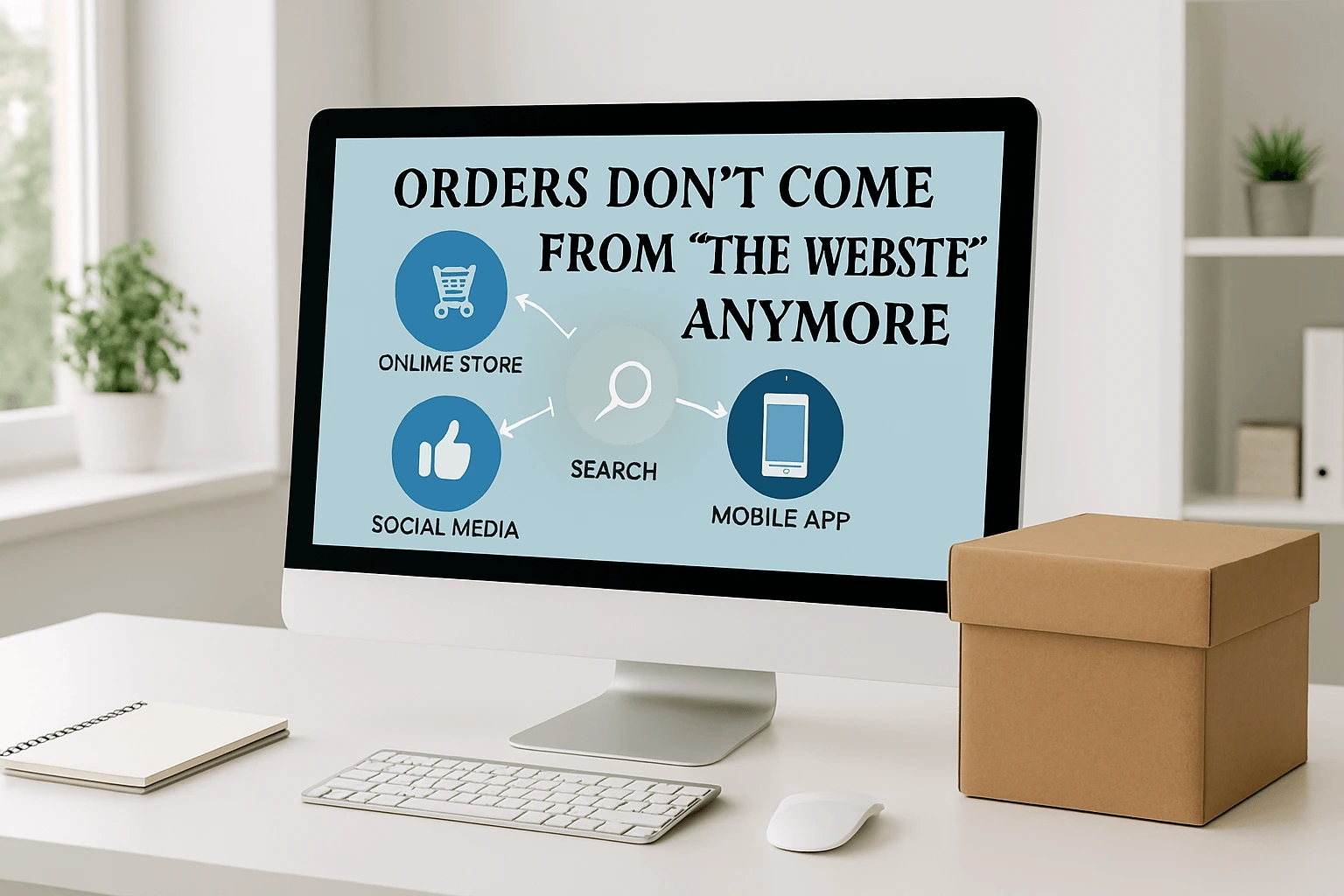
The idea that orders originate from a single storefront is outdated. In 2026, commerce happens wherever the customer happens to be—and that means orders arrive through a growing mix of channels, each with its own data structure, rules, and expectations.
Orders now flow in from:
Most commerce stacks struggle the moment volume and channel diversity increase. They weren’t designed to handle this level of fragmentation, so they rely on fragile integrations, delayed syncs, and manual intervention to keep orders moving. When something breaks, it usually breaks silently, until inventory is wrong, fulfillment stalls, or finance flags discrepancies weeks later.
Acumatica takes a fundamentally different approach. Its commerce connectors and order management framework are designed to absorb multi-channel complexity at the point of entry, not after the fact. Orders from every channel are ingested, standardized, and validated against core business rules immediately, before inventory is committed, before invoices are generated, and before financials are posted.
This upfront normalization is what keeps the rest of the system stable. Pricing logic, tax rules, customer terms, and fulfillment workflows apply consistently, regardless of where the order originated. There’s no secondary cleanup process, no exception queue growing in the background, and no reliance on finance to “fix it later.”
Every order enters Acumatica already aligned with ERP logic, clean, structured, and ready to move through fulfillment and billing without friction. In 2026, that’s the difference between scaling confidently and constantly firefighting behind the scenes.
The Real Innovation: Order Normalization at the Core
Every commerce channel speaks its own language. Marketplaces, headless storefronts, B2B portals, POS systems, and sales tools all describe orders differently, even when they’re selling the exact same product to the same customer.
That disconnect is where most commerce stacks start to fracture.
Where Most Systems Break Down
When orders arrive from multiple channels, inconsistencies pile up fast:
Legacy ERPs were never built to interpret this level of variation. Instead, they push the problem downstream, forcing operations or finance teams to manually reconcile data once orders are already in motion.
How Acumatica Handles It Differently
Acumatica eliminates the problem at the point of entry. Orders are normalized the moment they’re ingested, validated against a single ERP rule set before they touch inventory, fulfillment, or finance. That means every order, no matter where it originates, enters the system already aligned with how the business actually operates.
What Normalization Unlocks Across the Stack
Because orders are standardized upfront:
There’s no back-office cleanup phase. No waiting to see what broke overnight. No surprise discrepancies at month-end. Orders don’t just move faster; they move correctly. And in modern commerce, that’s the difference between scaling smoothly and constantly putting out fires.
How Acumatica Handles It Differently
Acumatica eliminates the problem at the point of entry. Orders are normalized the moment they’re ingested, validated against a single ERP rule set before they touch inventory, fulfillment, or finance. That means every order, no matter where it originates, enters the system already aligned with how the business actually operates.
What Normalization Unlocks Across the Stack
Because orders are standardized upfront:
There’s no back-office cleanup phase. No waiting to see what broke overnight. No surprise discrepancies at month-end. Orders don’t just move faster; they move correctly. And in modern commerce, that’s the difference between scaling smoothly and constantly putting out fires.

Order Management That’s Actually Connected to Reality
Most order management systems look capable on the surface, but fall apart once real-world complexity shows up. They manage status changes, approvals, and workflows—then hand everything off to other systems and hope nothing breaks along the way.
Acumatica’s order management works differently because it isn’t a detached workflow layer. It’s deeply embedded into inventory, fulfillment, billing, and accounts receivable, operating inside the same financial and operational framework from start to finish.
That architectural choice changes everything.
What “Connected” Actually Means in Practice
When order management lives inside the ERP:
Why This Matters at Scale
When order management remains within the ERP, there’s no need for a secondary system to reconcile, and no lag between operational reality and financial truth. Inventory updates, fulfillment actions, invoicing, and AR postings all happen within a single system of record.
Everything stays in sync because it never had a chance to drift apart. That’s what modern order management looks like in 2026, not a layer on top of the business, but a core function that reflects reality as it happens.
Checkout Isn’t a Moment—It’s a System Decision
Checkout Has Become a Trust Test
Checkout is no longer just the last step in a buying journey—it’s the point where customers decide whether they trust your business to follow through. Most abandoned carts don’t happen because a button is the wrong color or a page loads a second too slowly. They happen because something in the process feels unreliable.
Common friction points show up fast:
These issues aren’t just UX problems. They’re system design problems—and they can’t be solved with front-end tweaks alone.
Where Acumatica Gets Checkout Right
Acumatica’s commerce architecture treats checkout as a controlled extension of the ERP, not a disconnected event at the edge of the system. It supports modern buying behavior—guest checkout, account-based purchasing, split payments, and channel-specific rules—while still enforcing financial accuracy and operational consistency.
What makes this work is alignment behind the scenes. Orders arrive with validated totals, correct tax logic, approved payment methods, and clearly defined terms. There’s no downstream cleanup and no scramble to reconcile discrepancies once the order is already placed.
The outcome is simple but powerful: orders enter the system clean, customers move through checkout without friction, and finance doesn’t inherit problems created upstream. Checkout becomes what it should be in 2026—not a risk point, but a confidence builder.
Add EBizCharge in “Checkout Isn’t a Moment—It’s a System Decision”
When Acumatica is paired with EBizCharge, this control extends directly into payment processing. EBizCharge embeds payments inside Acumatica’s ERP framework, allowing customers to pay by credit card or ACH without being pushed through disconnected gateways or external workflows. Payment methods can be stored securely, authorizations happen in real time, and transactions remain tied to the customer record and financial rules inside Acumatica. Checkout stays fast for buyers, but is governed by ERP logic for finance.
Promotions That Don’t Blow Up Margin Reporting
Discounts are deceptively simple. Applying a promotion at checkout is easy. Understanding its real impact on margin, revenue, and financial reporting is where most systems fall apart.
In disconnected commerce stacks, pricing logic lives in too many places. The storefront applies one set of rules. Marketplaces apply another. The ERP records something slightly different based on how data arrives. Everything looks fine—until finance closes the month.
That’s when the cracks show:
How Acumatica Keeps Pricing Honest
Acumatica eliminates this disconnect by centralizing pricing and promotion logic inside the ERP framework. Instead of allowing each channel to decide what a discount means independently, Acumatica enforces a single source of pricing truth across the entire commerce stack.
As a result:
This alignment does more than protect margins. It removes weeks of post-month-end cleanup, eliminates pricing disputes between teams, and gives leadership confidence that reported revenue actually reflects how the business sold.
Fraud, Credit, and Risk Are Handled Before Damage Is Done
By the time fraud shows up in accounts receivable, the damage is already baked in. Inventory has shipped. Revenue has been recognized. Time has been wasted. At that point, AR isn’t preventing loss—it’s documenting it. That’s the flaw in most commerce stacks: risk management is reactive.
Acumatica pushes risk controls upstream, inserting them at the moments where they actually matter—before an order turns into a financial liability.
Where Acumatica Applies Control—Early
Instead of relying on post-transaction audits, Acumatica embeds safeguards directly into the order lifecycle:
The result is simple but critical: revenue protection happens before revenue is at risk, not as a cleanup exercise once problems surface.
AR Is No Longer the End of the Process—It’s the Engine
This is where Acumatica quietly outclasses most commerce stacks.
In traditional systems, AR is treated as the final destination—the place where transactions go to die slowly while finance waits for payment. In Acumatica, AR is an active, real-time engine that drives cash flow, visibility, and decision-making.
Invoices Aren’t “Generated”—They’re a Natural Outcome
In too many environments, invoicing is a disconnected ritual. Someone runs a batch. Someone reviews exceptions. Someone fixes what broke between systems. Acumatica removes that friction entirely.
How Invoicing Actually Works in Practice
Because orders, fulfillment, payments, and financials live in the same system:
AR isn’t reconciling history—it’s operating in the present, with full context intact.
Cash Flow Doesn’t Improve by Asking Nicely
Most companies don’t struggle with AR because customers refuse to pay. They struggle because the system doesn’t apply pressure consistently or intelligently.
Common breakdowns include:
Acumatica turns AR into an active participant in revenue collection.
How Acumatica Accelerates Cash Flow
This is how cash moves faster—without adding headcount or increasing friction.
How Acumatica Accelerates Cash Flow
External payment tools made sense when transaction volumes were low and commerce was simpler. At scale, they become liability magnets, introducing reconciliation gaps, security risks, and operational blind spots.
Acumatica treats payments as a core ERP function, not an afterthought.
What Native Payments Actually Deliver
Payments aren’t “integrated” into Acumatica. They’re embedded, which changes how reliable and scalable the entire system becomes.
How EBizCharge Extends Acumatica’s Native Payment Model
This is where EBizCharge plays a critical role in Acumatica’s commerce stack. EBizCharge embeds payment processing directly into Acumatica, extending native payment capabilities without introducing disconnected gateways or reconciliation-heavy workflows.
Instead of routing transactions through third-party systems and fixing issues later, payments processed through EBizCharge are posted directly inside Acumatica—against orders, invoices, and customer balances. Authorization, settlement, and reconciliation happen within the ERP’s financial framework, preserving financial accuracy from checkout through cash application.
For finance teams, this means fewer unapplied payments, fewer suspense accounts, and no guessing which invoice a payment belongs to. For operations and sales, it means payment status is always current and visible, not delayed by sync cycles or batch jobs.
AR Visibility That Actually Changes Decisions
Static aging reports tell you what already gone wrong. They don’t help you prevent the next problem. Acumatica replaces static reporting with real-time visibility that finance teams can actually act on.
What Finance Teams See—Before It’s Too Late
Payments aren’t “integrated” into Acumatica. They’re embedded, which changes how reliable and scalable the entire system becomes.
Why Acumatica’s Commerce Stack Holds Up When Others Crack
ERP-First—On Purpose
Most commerce stacks treat ERP as the final stop in the process—the place data lands once commerce is done with it.
Acumatica treats ERP as the command center.
That architectural choice leads to:
Commerce doesn’t hand problems to finance. It shares responsibility from the start.
B2B and B2C Without Forked Systems
Most platforms force businesses to choose: build for B2C speed or B2B complexity.
Acumatica handles both in the same environment:
No duplicated logic. No parallel systems. No compromises.
Flexibility Without Fragility
Custom commerce stacks look powerful—until something changes.
Acumatica’s configuration-first model allows businesses to:
Change becomes manageable instead of dangerous.
The Ugly Edge Cases That Break Most Platforms—and Don’t Break This One
Real commerce is messy. Acumatica is built for that reality.
It handles:
These aren’t edge cases—they’re everyday commerce. Acumatica expects them.
How Smart Companies Are Using This Stack Right Now
The companies winning with Acumatica aren’t chasing features. They’re fixing fundamentals.
They’re:
That’s how systems compound value—and why Acumatica’s Commerce Stack isn’t just surviving in 2026, but pulling ahead.
How Allparts Inc. Unified Commerce with Acumatica
When Allparts Inc. needed tighter control over inventory, pricing, and order flow across B2B and B2C channels, DotcomWeavers delivered a commerce-to-ERP integration that actually holds up under scale.
By integrating Adobe Commerce (Magento) with Acumatica ERP, we helped Allparts move from fragmented syncs to a real-time, system-led operation.
What changed:
Why it mattered:
Orders now enter Acumatica already normalized. Inventory stays accurate. Finance trusts the numbers. Sales teams move faster without workarounds. This is what ERP integration looks like when it’s designed around reality—not demos.
Built and delivered by DotcomWeavers.
Fewer Excuses, Real Results: The Path Forward
The reality in 2026 is clear: commerce success isn’t about stacking more tools on top of each other. It’s about building a system that works as one, where orders, checkout, payments, and AR flow seamlessly, data stays accurate, and teams spend time growing the business instead of fixing it.
Acumatica’s Commerce Stack delivers that reality. By normalizing orders at entry, connecting checkout to financial truth, and embedding AR and payment controls upstream, it turns what used to be chaos into predictable, scalable revenue operations. Multi-channel, B2B or B2C, complex pricing, backorders, none of it breaks the flow.
That’s where DotcomWeavers comes in. We don’t just implement tools, we engineer commerce systems that work end-to-end. For over a decade, we’ve helped companies like Allparts Inc. integrate Magento with Acumatica ERP, streamline complex order flows, enforce customer-specific pricing, optimize checkout, and automate AR processes. From strategy to execution, we ensure every touchpoint, from storefront to finance, aligns with operational reality.
Our collaborations with partners like EBizCharge allow us to design commerce systems where payments, AR, and financial reporting live inside the ERP instead of orbiting around it. That’s how checkout becomes reliable, AR becomes proactive, and cash flow becomes predictable.
With DotcomWeavers, your business doesn’t just adopt a platform; it gains a reliable, scalable commerce engine that reduces manual work, prevents errors, and positions you to grow confidently. If your current stack relies on temporary fixes or human patchwork, it’s time to stop managing chaos and start running commerce that actually performs.
About the Author: Amit Bhaiya

Receive a Personalized Consultation for Your eCommerce Requirements!
Receive a Personalized Consultation for Your eCommerce Requirements!